Wednesday, September 2, 2020

Welcome to BUFS TTP 2020

This is a group blog for instructors and trainees in the
Busan University of Foreign Studies Teacher Training Program.
Below is a list of course and group notes. 


Friday, August 7, 2020

The WoohooClub - Running through the finish line !

Once you have joined the Teaching Demonstration 'Whew Club', there are a few more things you need 'To Do' before joining the 'WooHoo Club'. 

  • Please complete your lesson overview form and post activities in the TTP Kitchen (please remember to select appropriate labels).   The goal is to share useful components of your lesson with past, current, and future trainees. You do not need to post the entire lesson or copy and paste the entire overview, but please make sure to include basic procedures and materials.
  • Teaching Demonstration #2 Reflection
    After watching your video, please complete the Teaching Demonstration Assessment and Reflection Form online.
  • Document the Jeju Experience
  • Make sure ER Log is updated and one book is contributed to the TTP 'Library'
  TTP To Go

You will continue to have access to all TTP materials on the blog and Google Drive, but just in case.you can....
  • Download all or part of Google Drive folders (Course Materials, Teaching Demonstrations, etc)
  • Download Google Photo Albums
  • Blog or Diigo any TILL sites you may want to use later.


Running through the finish line:  To continue working on a task with maximum effort until after it is completed. 

Finish Line Quotes:
  • Being the first to cross the finish line makes you a winner in only one phase of life. It's what you do after you cross the line that really counts.    -Ralph Boston
  • But for each of us, isn't life about determining your own finish line?  - Diana Nyad
  • Embrace that finish line...no matter how many other runners cross it ahead of you, it's all yours.   -Nike
  • 'Dead last' is greater than 'did not finish' which beats 'did not start.' - unknown
  • As long as you are alive, there are no real finish lines... catch your breath, stay fueled, and keep going.    - Jeff Lebow
Finish Strong! or...


The Homestretch Schedule

August 10~12                                Regular Class Schedule
August 13                 Morning Classes, Lunch Party at The Party
August 14: Closing Ceremony, The First Day of the Rest of Your Life


Sunday, August 2, 2020

Teaching Demonstration #2


Face-to-Face this time!

  • 25-40 minute recorded lesson demonstration (mock teaching)
  •  Demonstrate beginning, ending, and most lesson activities.
  • Should include some type of experimentation 
  • Can include aspects of your mini-presentation if additional components and/or something new is included

  • Sources of Inspiration/Experimentation: 
  • Project Groups, mini-presentations, Jeju Travels, TTP courses, UQ, Cambly, TTP Kitchen posts and Activity Sources, Resource Books, or anything else that has inspired you. Must be something you haven't done before and must be somewhat unique within your TTP class

  • Priorities: Experimental, Realistic, Replicable, Demonstrates TEE
    Official Assessment Criteria

Teaching English in English
 - Classroom English Megalist  *  Checking for Understanding (ICQ & CCQ)  More TEE Resources

Wednesday, July 15, 2020

Emptying the Quiver

A few more arrows from Jeff's Quiver of Lesson Arrows...


Brain Health & Nutrition (Videos)

Main Readings (Compiled from several of the sources below)


Speech Mimicking


Stress Jigsaw Readings & Discussion Questions ( Undergraduate   TTP    GSIT)


History of Media & Technology
Timelines     Events    Slideshow


Move Over, Millennials: How ‘iGen’ Is Different From Any Other Generation

Job Skills of the Future


http://englishwithjeff.com/lesson-job-interviews-and-resumes/

includes list of Students' favorite YouTube channels


http://englishwithjeff.com/video-learning-to-all-the-boys-ive-loved-before-part-1/


Odds & Ends


Tuesday, June 16, 2020

Week 16

Week 16


3 things this week
  • TOEFL listening
  • dictogloss
  • pair work listening


Saturday, June 6, 2020

Listening Week 15

Listening Week 15


Here's the plan for the listening class.

Nose to the grindstone and pedal to the metal.

It's time to buckle down with high octane TOEFL listening.


Week 15 Writing

Week 15 Writing

There are three weeks left in this cycle, so let's focus on creating, feedbacking, and rewriting.

Part 1

Let's aim to finish the first, second, or third draft of these two pieces:

  • cubing
  • population pyramid analysis

Part 2

This was on the agenda for last week, but we didn't really get to it.

This is a simple exercise.
Watch a video. It has many short segments.
Write a negative sentence to describe each failed activity.


Do you know all of these words and phrases?
You need to know these watching the video.
  1. vending machine
  2. basketball hoop
  3. dart
  4. nail
  5. domino
  6. DVD
  7. golf ball
  8. download
  9. pinball machine
  10. gas pump
  11. rocket

Unsatisfying
 UNSATISFYING from PARALLEL STUDIO on Vimeo.


Tuesday, June 2, 2020

WEEK 14 WRITING

WEEK 14 WRITING


Part 1

Freewriting

Part 2 Vocabulary worksheet

hand out

Part 3 Sentence writing

This is a simple exercise.
Watch a video. It has many short segments.
Write a negative sentence to describe each failed activity.


Before watching the video
Do you know all of these words and phrases?
You need to know these watching the video.
  1. vending machine
  2. basketball hoop
  3. dart
  4. nail
  5. domino
  6. DVD
  7. golf ball
  8. download
  9. pinball machine
  10. gas pump
  11. rocket

Unsatisfying

UNSATISFYING from PARALLEL STUDIO on Vimeo.


Part 4 Rewrite and feedback

cubing
population pyramid

Monday, June 1, 2020

Writing: Your Identities


Class Handout

Social Identity Theory

What is Social Identity Theory?

What is Social Identity?

The Cultural Iceberg
Writing Task#1
 (Due July 23, 11:59pm)

Write at least 300 words about different parts of your identity. Please use a Google Doc in your TTP2020 Writings folder. Feel free to include related photos.   Jeff's Example


    Skills Training

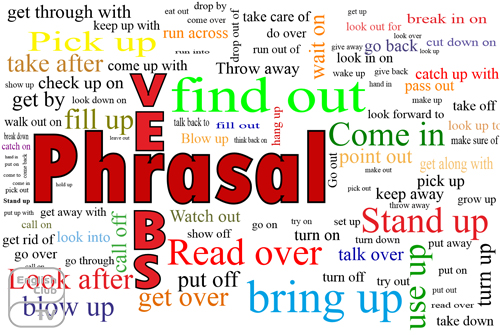
    Phrasal verb is the name given to an English verb which is composed of two or three words. One verb is combined with a preposition (like on, in, under) or an adverb (like up, down, away). Sometimes a phrasal verb can have a meaning that is very different to the meaning of at least one of those two or three words separately. 
    Here are some examples:
    • Maria didn't know the word, so she looked it up in the dictionary.
    • Oh no, we've run out of milk! I'll have to buy some more.
    • Farmers have to get up early in the morning.
    • The rocket took off with a loud roar.
    LISTS

    From Quizizz Join.quizizz.com

    Phrasal Verbs    0192599  (easier) quiz
    Phrasal Verbs 2    5032338  (more challenging)  quiz


    From Kahoot


    Skills Training - Collocations
    A collocation is made up of two or more words that are commonly used together in English. Think of collocations as words that usually go together. There are different kinds of collocations in English. Strong collocations are word pairings that are expected to come together, such as 'make a cup of tea' or 'do your homework'. 

    Inquiry, Task, & Project based Language Learning


    Discussion Notes

    Innovative Education Playlist

    IBLL - Inquiry-based Language Learning

    TBLT - Task-based Language Teaching

    Project-Based Learning


    20% Time


    The History of 20-Time:

    3M started it in the 1950's with their 15% Project.  The result? Post-its and masking tape. Google is credited for making the 20% Project what it is today.  Google asks its employees to spend 20% of their time at Google to work on a pet project...a project that their job description doesn't cover.  As a result of the 20% Project at Google, we now have Gmail, AdSense, Google News, and my favorite, the Google Teacher Academy. Using 20 Time in the workplace allows innovative ideas and projects to flourish and/or fail without the bureaucracy of committees and budgets.


    What Are the Options?

    20% Project: A lot of time has been spent with both success and failures to mold the 20% Project template series above.  If you'd like a structured template for instituting 20-Time in your classroom, the 20% Project is for you. Check out the 20% Project writeup, the 20% Project Template Series, and the 20% Project Community. For an in-depth guide on integrating 20-Time in your class- Kevin Brookhouser's 20Time Project is a must read.

    Genius Hour: For those not ready for a commitment (teachers or students) try Genius Hour. Students search a different topic each week with a few informal presentations at the end of the hour.

    Extrinsic-Intrinsic Motivation


    Process Oriented Guided Inquiry Lessons (POGIL)


    POGIL is an acronym for Process Oriented Guided Inquiry Learning. Because POGIL is a student-centered instructional approach, in a typical POGIL classroom or laboratory, students work in small teams with the instructor acting as a facilitator. The student teams use specially designed activities that generally follow a learning cycle paradigm. These activities are designed to have three key characteristics:
    • They are designed for use with self-managed teams that employ the instructor as a facilitator of learning rather than a source of information.
    • They guide students through an exploration to construct understanding.
    • They use discipline content to facilitate the development of important process skills, including higher-level thinking and the ability to learn and to apply knowledge in new contexts.